Make an online booking here:
Book Now
In a recent large-scale Phase 3 trial1 by the University of Sydney, a group of people who previously had basal cell carcinomas or squamous cell carcinomas were given a form of Vitamin B3 for 12 months.
The results made international headlines when the study found that the number of new
In addition, the number of pre-cancerous actinic keratosis lesions were reduced by 13%, and there was also a decrease in the number of these lesions forming.
(In another study, the same version of B3 has been shown to reduce solar keratoses by about 35% after two months of treatment.)
How Does B3 Reduce Skin Cancer Risk?
When your cells are working as they should, your DNA instructs your cells to grow normally. However, UV radiation from the sun can damage the DNA in your skin, and this damaged DNA results in the creation of skin cancers.
The good news is that this research shows that B3 may help to reduce the risk of skin cancer by helping the DNA repair itself.
(The study did not look at whether the rate of melanomas was also reduced, however anecdotal evidence from a local skin doctor, who is a Fellow of the Skin Cancer College of Australasia, suggests that it has a similar effect on this type of skin cancer as well.)
For those who have been previously diagnosed with BCC or SCC, the benefits of vitamin B3 could literally be life-changing. However, it is important to note that a certain type of B3 (nicotinamide) and a certain dosage was needed to obtain these results. So to help prevent skin cancer, nicotinamide should be given as a high-dose treatment rather than just as a basic supplement.
If you have had a skin cancer, or have a family history of it, or if you just want to try and prevent any skin cancers developing, we suggest making an appointment with one of our naturopaths. Or even better, book in for a free Comprehensive Assessment first, so that we can gain a very detailed understanding of your body and how it is functioning, allowing us to precisely tailor any treatment you may have. (Terms and conditions- the Assessment is a completely free service, with no obligations whatsoever.)
Be well, and have a great life!
1https://www.ncbi.nlm.nih.gov/pmc/articles/PMC4570055/

Last year it was estimated that around 400,000 Australians suffer from dementia, and this number is expected to double by 2058.There is no effective treatment using pharmaceutical drugs, however there have been a number of studies showing the effectiveness of natural therapies for this condition.
One study, showed that increasing your magnesium intake is likely to “lead to less age-related brain shrinkage, which is associated with better cognitive function and lower risk of delayed onset of dementia in later life”. See more on this study by following the link below.
Magnesium plays an essential role in nerve transmission and nerve-muscle interaction. It also protects nerves against excessive stimulation, which can damage or even kill nerve cells, and cause many types of neurological disorders. Due to its importance to the nervous system, research continues to be conducted on its role in preventing or treating migraines, chronic pain, epilepsy, Alzheimer’s, Parkinson’s, stroke, epilepsy, anxiety and depression.
If you have a health issue, or have a family history of a health problem and want to prevent it, we offer a free Comprehensive Assessment, to see what is going on in your body, what is causing the problem, and the best way to treat or prevent it. (Terms and conditions- the Assessment is a completely free service, with no obligations whatsoever.)
Be well, and have a great life!
Hibiscus tea is high in antioxidants, and also offers many other health benefits. Recent research has also shown that it may be able to prevent and even reverse Alzheimer’s Disease.

Alzheimer’s is caused by a build-up of certain protein deposits in the brain (A Beta and Tau protein aggregates). These deposits end up causing a chronic inflammatory reaction and damage to the nerve cells, which results in cognitive decline and memory loss.
The brain has its own immune cells called microglia, which attack and absorb these deposits. However constant exposure to the A Beta protein will end up exhausting the microglia, and they can’t continue to remove the deposits.
A recent study established that a compound found in hibiscus flowers called gossypetin activates the microglia. The research team treated mice afflicted by Alzheimer’s with gossypetin for three months, and demonstrated that the microglia were then able to scavenge the A Beta protein in their brains. The A Beta deposits decreased, and the impaired memory and cognition were almost restored to their normal levels. Clinical trials are now planned for developing gossypetin products for the prevention and treatment of dementia.
For more details on the research, visit https://www.sciencedaily.com/releases/2022/11/221116133855.htm .
Hibiscus flower is yet to be regarded as a medical treatment or cure for Alzheimer’s. However, if there is a history of this condition in your family, or if you are starting to experience mental decline or memory loss, it is worthwhile considering drinking hibiscus tea regularly.
With any condition, to get results it is always important to treat the causes of the problem. We are currently offering a limited number of free Comprehensive Assessments. (Terms and conditions- the Assessment is a completely free service, with no obligations whatsoever.) These help to identify
If you would like to book in for an Assessment, please give us a call on 3376 6911, or you can book online using the link at the top of the page.
Be well, and have a great life!
How’s your memory? Many people feel that their memory is gradually getting worse, and assume that this is a normal part of aging. But there are steps you can take to help improve your memory, and to help prevent the development of dementia or Alzheimer’s as you advance in years.

There are a number of factors that affect brain function and memory, however two of the main ones are medications and heavy metals.
Medications
There are many medications that have an effect on mental functions. Some of these that have a particular impact on memory include
Heavy Metals
Various heavy metals also negatively affect mental function and memory. One of the more common ones is aluminium, which is absorbed from aluminium cookware, flocculation agents added to water supplies, baking powders used in breads, deodorants, antacids, etc. Aluminium causes the nerves in the brain to become tangled (referred to as neurofibrillary tangles), and also causes a glue-like substance called amyloid, which interferes with the normal brain nerve conduction.
Diet
Recent research indicates that it may be possible to prevent and reverse Alzheimer’s.1 This research indicates that one key way of addressing memory issues and improving neural plasticity is through reducing inflammation in the body. Ideally, this involves
This protocol has been shown to arrest serious disease, as well as reverse more mild memory and cognitive impairment.1
The Gut
The 100 trillion microbes that live in our gastro-intestinal system are extremely important for overall health, especially brain health. Today the ‘gut–brain axis’ is a feature at major neuroscience meetings, and literally thousands of publications over the past decade have revealed that the gut microbiome could have profound effects on the brain, and may cause many disorders.2 Improving the balance of the microbiome has been shown to alleviate a variety of diseases ranging from diabetes, depression and anxiety, to foggy brain and obesity.3
The microbiome is a complete ecosystem inside our bodies. It has been shown that when the gut microbial diversity decreases, there is an increased prevalence of chronic inflammatory diseases such as inflammatory bowel disease, diabetes, obesity, allergies and asthma. So the answer is not in just taking a random probiotic, but in seeing an expert who understands the ecology of the gut and which specific good bacteria need to be increased to restore a healthy balance to this environment. (We would recommend seeing an experienced Brisbane naturopath for this.)
Some Specific Supplements
If you are suffering from a decline in memory, or want to prevent the development of dementia or Alzheimer’s as you age, you can book in for a free Comprehensive Assessment at our clinic. The Assessment is a detailed look at what is going on in your body, what is causing any problems, and the best way to sort them out. (Terms and conditions- the Assessment is a completely free service, with no obligations whatsoever.)
Be well, and have a great life!
1.Bredesen, D. E. (2014). Reversal of cognitive decline: A novel therapeutic program. Aging (Albany NY), 6(9), 707.
2. How gut microbes could drive brain disorders. Nature.
3. Perlmutter, D. (2015). Brain Maker: The Power of Gut Microbes to Heal and Protect Your Brain-for Life: Hachette UK.
The human body is very complex, so we treat a very broad range of conditions. The following is a list of some of the conditions clients came to us for in a single week.

If you have a health issue and you would like to find out if we can help you, you can book in for a free Comprehensive Assessment. The Assessment will look at what is going on in your body, what is causing any problems, and the best way to resolve them. (Terms and conditions- the Assessment is a completely free service, with no obligations whatsoever.) Have a great life!
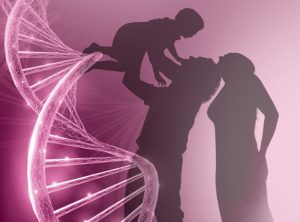
Everyone has heard of DNA, which is like a blueprint for your body; a set of instructions on how your cells create you. But have you heard of your epigenome? This is the part of your cells that decides which sections of your DNA are activated (or which genes are switched on or off).
So your DNA is the instructions your body comes with, and your epigenome decides how those plans are used. For example, in cells in your eye the epigenome will turn on the genes in your DNA that allow them to detect light. In your red blood cells, the epigenome will turn on the genes to carry oxygen.
As you can see, the epigenome plays a very powerful role in our health. It can also influence whether or not you develop diseases that may be coded in your DNA.
Your DNA is always constant, but your epigenomes are more fluid. They change as we grow and develop (such as during puberty), and are influenced by many other factors, including diet, levels of various nutrients, lifestyle factors, physical activity, psychological stress, toxins, pollutants, pesticides, and countless other factors.
Everybody is born with strengths and weaknesses in their body. We all inherit tendencies towards the diseases our parents had, such as arthritis, diabetes, high blood pressure, asthma, heart disease, Alzheimer’s, etc. Whether we develop these diseases or not depends on our epigenomes. The good news is that there are exciting new developments in how to look after and improve your epigenomes. According to Professor Anthony Hannan (head of the Epigenetics and Neural Plasticity Laboratory at the Florey Institute of Neuroscience and Mental Health), “Epigenetics is a revolution that is going to transform medicine, where the prevention and treatment of disease will be based on your genome (DNA) and your epigenome, which is different for every set of cells or tissues in your body.”
If you were a song, your DNA is like the sheet music, and your epigenomes are the sound engineers that create how that music will be played- which bits are loud, which are edited out, whether the melody is dominant, or the drums are taken out altogether. Would you like the song of your life to be played by a high-class orchestra, or by a badly tuned ukulele?
It is now understood that your epigenome is influenced by the health of your parents, and likely even your grandparents. So changing your own epigenome can affect your children’s and grandchildren’s development and health. Our understanding of how epigenetic changes are transmitted from parent to child is still not entirely clear, but the evidence suggests that this happens at the time of conception and during pregnancy. So it is great to work on improving your epigenome while you are pregnant, but excellent to do it before the baby is even conceived. A baby’s first 2 years is also a crucial time to improve their epigenome. (Naturopaths recommend working on your epigenome for 12 months prior to attempting to fall pregnant if possible.)
Our naturopaths are trained in the latest natural methods of improving your epigenetic health. If you are interested in optimising your future health (or that of your children), please book in for a free Comprehensive Assessment, and we can check how well their treatments should work for you.

How is your immune system? If you came through the cold and flu season without coming down with anything, you would assume that it is pretty good. But preventing colds is only a small part of what the immune system does. And looking after it can make a huge difference to your future health. Imagine how our streets would end up if we had no police force and no rubbish removal system!
Your immune system is designed to maintain your body by
1. Dealing with any attack
2. Repairing any damage
3. Controlling your own cells
4. Helping your body adapt to changes in temperature and climate
There are far more microbes living in our body than you would think- around 100 trillion of them! So our immune system is constantly fighting to keep the right balance of good and bad bugs in and on our bodies.
If your immune system is not strong, it won’t help your body cope well with changes in temperature, season or climate. This is why many people get colds and flus after they are exposed to a cold wind or draft (get a ‘chill’), or during the cold and flu ‘seasons’, when the temperatures are fluctuating as the seasons change (especially around the start of winter or spring).
If your immune system isn’t working well, you can end up with
Allergies and food intolerances occur when you immune system is overstimulated and reacts to something that has come into your body or on your skin. The number of people with allergies is increasing rapidly, with 1 in 4 children now suffering from them. Autoimmune conditions happen when your immune system is so overstimulated that it starts attacking parts of your own body. It is thought that one of the main reasons for all three conditions is because we have made our environments and our bodies too clean and sterile. We have removed many of the evolutionarily protective microbes (bacteria, viruses, parasites) we have evolved to have in our bodies, under the assumption that all such bugs are harmful[1]. So your immune system cannot behave and act in the way it was designed to. Biologists used to think that the human body is capable of doing all it needs to on its own to exist. However, recent research shows that the right bacteria in our bodies provides vital help with many of the body’s basic functions, including growth, digestion, and self-defence[2]. And upsetting the balanced ecosystem between the correct bacteria in our bodies and our own cells could be causing unprecedented numbers of children to develop autism, ADHD, food allergies, asthma and many other chronic problems.
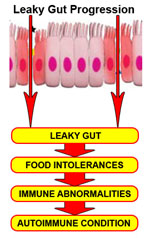 Another very common cause of food intolerances and allergies is ‘leaky gut syndrome’. Under normal circumstances, the epithelial cells that line your small intestine are joined tightly to each other. This makes the lining of your intestine nearly leak-proof, and only fully digested food molecules are allowed to pass through. If there are strong stresses on these delicate structures, these tight joins may start to separate, creating gaps between the cells. These gaps make your gut ‘leaky’, and then large, undigested food molecules can pass through into the body, where they are collected by the bloodstream and lymph vessels of your intestine.
When your immune system spots these large molecules, it decides that they are too big to be digested food, so it must be a foreign invader into the body, such as a virus or bacteria, and it attacks them. Your immune system attacking these food molecules in your blood can cause a very broad range of problems. (For more details, please see Food Intolerance Testing Now Available.)
Getting your immune system in good shape involves five things.
1. Getting rid of any focal infections
The sinuses are the most common area for focal infections, so these need to be carefully checked and treated if needed.
2. Strengthen your nutrient levels
Vitamin C and Zinc are the most important, but other nutrients, such as vitamin D, are also essential. (Vitamin D is necessary for the ‘killer T-cells’ to hunt down and destroy cells that are infected with germs or that have become cancerous.)
3. Improve any lifestyle factors
Low energy and stress both drag your immune system down. If it is not possible to change your lifestyle factors, naturopathy and acupuncture can help compensate. Sunlight is the best source of vitamin D, but not too much!
4. Getting your bacterial ecosystem right
Since 70- 80% of your body’s immune cells are in your digestive system[3], it is crucial to have the right bacterial balance in your gut to have a good immune system. If your diet isn’t right, you will end up with bad gut bacteria, and these bugs send the wrong messages to the immune system, creating illnesses in the body. (For more details see our article How Bad Gut Bacteria Can Cause Diabetes, Asthma, Ulcerative Colitis, Multiple Sclerosis, Autism, Allergies & Autoimmune Diseases.) Probiotics can provide the good bacteria we need, however since our internal ecosystems are so complex, there is no one probiotic that can sort out everyone’s systems. For example, we supply ten different probiotics for different purposes. (These are Practitioner Prescribing Only products, so a trained therapist has to determine which is the correct one for you.)
5. Address any allergies or food intolerances
We can check the health of your digestive system, and also perform a Food Intolerance Test. Treatments for leaky gut syndrome, overactive immune systems, food intolerances and allergies are available.
If you want to take care of your immune system, or if you have any immune issues or weaknesses, please book in for a Comprehensive Assessment at our clinic. We can then have an in-depth look at what is happening in your body, what is causing the problem, and what can be done to sort it out. These Assessments are very thorough, and you will learn a lot about how your body is working. Our clients find them very helpful, interesting and informative. We currently have a limited number of free Assessments available, so please contact the Clinic soon if you would like to book in for one.
[1] http://www.ncbi.nlm.nih.gov/pmc/articles/PMC2841828/
[2] http://www.scientificamerican.com/article/ultimate-social-network-bacteria-protects-health/
[3] http://www.ncbi.nlm.nih.gov/pubmed/10564096
In early November, the ABC ran a 2 part program called ‘Heart of the Matter. The Cholesterol Myth: Dietary Villains and Cholesterol Drug War’. In this program, they looked at how valid the link between cholesterol and heart disease is, and how the majority of patients taking cholesterol lowering drugs won’t benefit from taking them.
The main cholesterol drugs are Statins, which can cause a large range of side effects, some of which can be debilitating, such as severe muscle injury and fatigue.
They also block the production of some of the nutrients produced in the body, such as CoEnzyme Q10, which ironically is an antioxidant that plays a vital role in maintaining cardiovascular health.
You can view both parts of the program by clicking here. Natural therapies usually work very well to improve both the level and type of cholesterol in the body, and to improve the health of the heart as well. It is my opinion that, if you can take care of a problem naturally, without the use of drugs or surgery, you will be better off. If you would like to find out about natural approaches to look after your cholesterol and heart, please book in for a Health Assessment with Peter.
Please note that you should not change taking any medication you have been prescribed without checking with your doctor.
 Do you feel younger or older than your age? No one can slow down time, but is it possible to slow down the effects of time on the body? Is it possible to feel well, have vitality, and be free of disease as we get older? What about having a good memory and a clear mind? Can we avoid the diseases that our parents suffered from?
Australia has an aging population, but I believe that age is not about how many candles are on your cake- it is about the health of your body and your mind. There is a local couple in their nineties that still play golf at the McLeod Golf Club! Is this just good genes, or do we have some control over our future health? What causes us to age anyway?
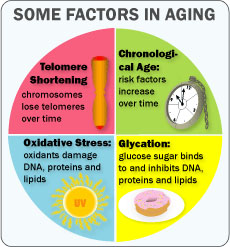
There are many factors behind aging, but the 3 most important ones are oxidative stress, glycation, and telomere shortening.
Oxidative Stress
The body uses oxygen for energy production. However, the process of oxidation in the body causes free radicals, which can cause damage to the cells. So free radicals are naturally produced by the body, and while we can cope with some free radicals, too many causes problems. Free radicals are also caused by stress, poor diet, alcohol, smoking, pollution, pesticides and many other chemicals, radiation, inflammation, and infections.
Free radicals react with our cell membranes and other structures such as DNA, lipids and proteins by stealing electrons from these molecules and causing damage. When a free radical attacks these essential molecules, they change into free radicals themselves, causing a chain reaction that can cause the destruction of the cell.
Free radicals can cause:
Antioxidants are able to neutralise free radicals by giving their own electrons to them, preventing this damage. After neutralising a free radical, antioxidants become inactive,
which means they need to be constantly re-supplied to our bodies through the right foods and supplements.
 Glycation
Glycation occurs when the sugar from what we eat chemically binds to some of our DNA, proteins and fats, leaving them unable to do their jobs. This problem becomes worse as we get older, causing body tissues to malfunction, resulting in disease and death.
Telomere shortening
Telomeres have been compared with the plastic tips on shoelaces, because they prevent the ends of our chromosomes from fraying and sticking to each other. This would scramble our genetic information, causing cancer, other diseases, or death.
Yet, each time a cell divides, the telomeres get shorter. When they get too short, the cell can no longer divide and becomes inactive or dies. This process is associated with aging, cancer and a higher risk of death. So telomeres also have been compared with a bomb fuse.
In human blood cells, the length of telomeres ranges from 8,000 base pairs at birth, to 3,000 base pairs as people age, and as low as 1,500 in elderly people. (An entire chromosome has about 150 million base pairs.) Each time a cell divides, an average person loses 30 to 200 base pairs from the ends of that cell’s telomeres.
Cells normally can divide only about 50 to 70 times, with telomeres getting progressively shorter until the cells become inactive, die or sustain genetic damage that can cause cancer.
(Telomeres do not shorten with age in tissues such as heart muscle, in which the cells don’t continually divide.)
Geneticist Dr Richard Cawthon and his colleagues at the University of Utah found that in people over 60, those with shorter telomeres were three times more likely to die from heart disease and eight times more likely to die from infectious disease. Other recent studies have linked telomere length to an array of age-related conditions, including cardiovascular disease, diabetes, osteoporosis, cancer, and Alzheimer’s.
Anti-Oxidants
These help stop the damage to DNA and cells from free radicals caused by oxidation in the body.
Most antioxidants come from plants and include vitamins A, C and E and carotenoids such as beta-carotene, minerals, phenolic compounds and other natural chemicals. Flavonoids are another powerful antioxidant and are contained in red wine and tea.
While good vitamin supplements containing antioxidants are available, it is also important to eat a variety of natural foods – fruits, vegetables, cereals, legumes, nuts, seeds and wholegrains – to help supply your body with a good range and quantity of antioxidants.
Some good antioxidant sources are:
Beta-carotene – orange foods such as carrots, pumpkin, apricots, sweet potatoes and some leafy greens such as kale.
Lutein – green, leafy vegetables such as spinach.
Lycopene – tomatoes, watermelon, papaya.
Selenium – rice and wheat.
Vitamin A – carrots, sweet potato, milk, egg yolks.
Vitamin E – almonds, vegetable oils, mangoes, nuts, broccoli.
Vitamin C – available in many fruits and vegetables such as parsley, broccoli, berries, oranges, cauliflower, kale.
In one study, scientists exposed worms to 2 antioxidants, and the worms’ lifespan increased an average of 44%.
Reduce Things that Cause Free Radicals
As mentioned earlier, these include poor diet, alcohol, smoking, pollution, pesticides and many other chemicals, radiation, inflammation, and infections.
Reduce Your Sugar Intake
This will reduce the level of glycation in your body, allowing the DNA and tissues to work more correctly.
Detox
Getting rid of accumulated chemicals and toxins in the body can reduce damage to the cells and help them to function more correctly. (However, to be effective, a detox should always be done under the direction of a health care professional such as a naturopath.)
Address Chronic Stress
For the sake of your physical and mental health and wellbeing, have a regular activity that reduces your stress, such as exercise, meditation, walking, or massage.
Address Chronic Health Problems
Long-term health problems cause a much higher level of free radicals in the body, especially those involving inflammation or infection, such as allergies. Please ask about treatment for any chronic problem at the clinic.
Healthy Diet and Lifestyle
An enzyme called telomerase keeps telomeres from wearing down too much. A healthy diet and lifestyle, plus quality supplements, helps with telemerase activity, and combining several healthy habits may magnify the benefits. In one study, men with prostate cancer who meditated and used other relaxation techniques, ate a low-fat diet including whole grains, walked 30 minutes 6 days a week, and took supplements of fish oil and vitamins C and E, boosted their telomerase activity by 29 to 84%.
Geneticist Dr Cawthon has said that if all the processes of aging could be eliminated and oxidative stress damage could be repaired, “one estimate is people could live 1,000 years.”
While we can’t offer you this yet, with the right nutritional support and treatments, we may be able to add many years of good health to your life. Imagine if you were given a car at birth, and told that this was the only one you would ever have your entire life, and that spare parts were very difficult to get – how well would you look after it? Your body is your most important physical possession. If you are interested in keeping your body younger for longer, retaining your mental clarity, and avoiding the sort of health issues that your parents or grandparents suffered, we can help out. We have created an Anti-Aging and Longevity program which is tailored to your individual requirements. If you would like to find out more, please ask for a free 10 minute phone consultation with Peter Mills, Head Therapist at the clinic.

Valued at $120, your Assessment will help to uncover:
All this will be fully explained to you, and you can ask as many questions as you like. That way we can be sure to give you all of the right information, understanding and advice you need. Terms and conditions: This is a free, no obligation offer.